

Let’s be honest.
Work stress is everywhere right now.
Deadlines pile up.
Slack messages never stop.
Meetings eat the whole day.
And your employees? They’re feeling it.
The good news is that you have more power than you think to change that.
This guide is for managers and employers who want to actually help, not just hang a “wellness” poster in the break room and call it a day.
Let’s dig in.
Why Employee Stress Is Your Problem Too
You might think stress is just something employees deal with on their own.
But stressed employees cost companies a lot.
According to the American Institute of Stress, workplace stress costs U.S. employers over $300 billion every year in lost productivity, absenteeism, and healthcare.
And a study published by the National Institute for Occupational Safety and Health (NIOSH) found that job stress is a leading source of stress for American adults.
When your team is stressed, they make more mistakes.
They call in sick more often.
They quit.
Reducing employee stress isn’t just a “nice thing to do.” It’s smart business.
What Causes Stress for Employees?
Before you can fix the problem, it helps to know what’s causing it.
Here are the most common reasons:
- Too much work and not enough time
- Unclear expectations or constantly changing priorities
- Feeling undervalued or ignored
- No control over their work
- Poor communication from leadership
- A manager causing stress at work (yes, this is a real thing, we’ll talk about it)
- Tension with coworkers causing anxiety
Sound familiar?
The first step is taking an honest look at what’s actually happening on your team.
How Managers Can Help Employees Deal With Stress
Managers have a massive impact on how their team feels every day.
Research from Gallup shows that the manager accounts for at least 70% of the variance in employee engagement.
That means you can either create calm or chaos.
Here’s how to be part of the solution.
1. Check In Regularly (And Mean It)
Don’t just ask “how are you?” and walk away.
Schedule short one-on-one chats every week.
Ask open questions like “What’s feeling hard right now?” or “Is there anything I can take off your plate?”
When people feel heard, stress drops fast.
2. Set Clear Expectations
Unclear goals are a huge stress trigger.
Make sure every person on your team knows exactly what they’re supposed to do, when it’s due, and how success looks.
When priorities change, communicate it quickly and clearly.
Don’t leave people guessing.
3. Stop Being the Source of Stress
This one is hard to hear, but it matters.
A manager causing stress at work is one of the top reasons people quit.
If you micromanage, send emails at midnight, give vague feedback, or play favorites your team is suffering.
Ask yourself honestly: “Am I making things better or worse?”
If you’re not sure, ask your team.
A simple anonymous survey can tell you a lot.
4. Model Healthy Behavior
If you work 70-hour weeks, your team thinks they have to also.
Take your lunch break.
Use your vacation days.
Shut your laptop at a reasonable hour.
When leaders model balance, employees feel permission to do the same.
5. Recognize Good Work
Feeling invisible is stressful.
A simple “great job on that presentation” goes a long way.
Make recognition a regular habit, not just something you do once a year during a review.
How Employers Can Help Employees Deal With Stress
Managers handle day-to-day moments.
But employers and HR teams shape the bigger picture.
Here’s what companies can do to reduce employee stress at the structural level.
1. Build a Culture Where It’s Okay to Rest
Many workplaces have an unspoken rule that busy = good.
Break that rule.
Encourage breaks.
Protect lunch hours.
Offer flexible schedules where possible.
A team that rests well performs well.
2. Offer Real Mental Health Support
An EAP (Employee Assistance Program) is a start.
But most employees never use them because they’re clunky or feel formal.
Consider something more accessible like the Healthy Mind App.

It’s a simple tool that gives employees guided breathwork, pain relief stretches, feel-good music, and daily motivation right from their phone or laptop.
It fits into the workday without feeling like extra homework.
3. Train Managers on Mental Health
Many managers want to help but don’t know how.
Offer training on topics like managing someone with anxiety at work, handling burnout signs, and how to have supportive conversations without overstepping.
A little training goes a very long way.
4. Review Workloads Honestly
Sometimes the problem is just too much work.
Do a workload audit.
Ask your team if they feel stretched too thin.
If people are consistently working nights and weekends just to keep up, that’s a structural problem, not a personal one.
5. Create Physical Space for Resets
Give employees a place to breathe.
A quiet room, an outdoor area, or even a comfortable corner with good lighting can help people decompress during the day.
Small changes to the physical environment can reduce tension significantly.
How to Help Employees Manage Stress Day-to-Day
Small, daily habits matter.
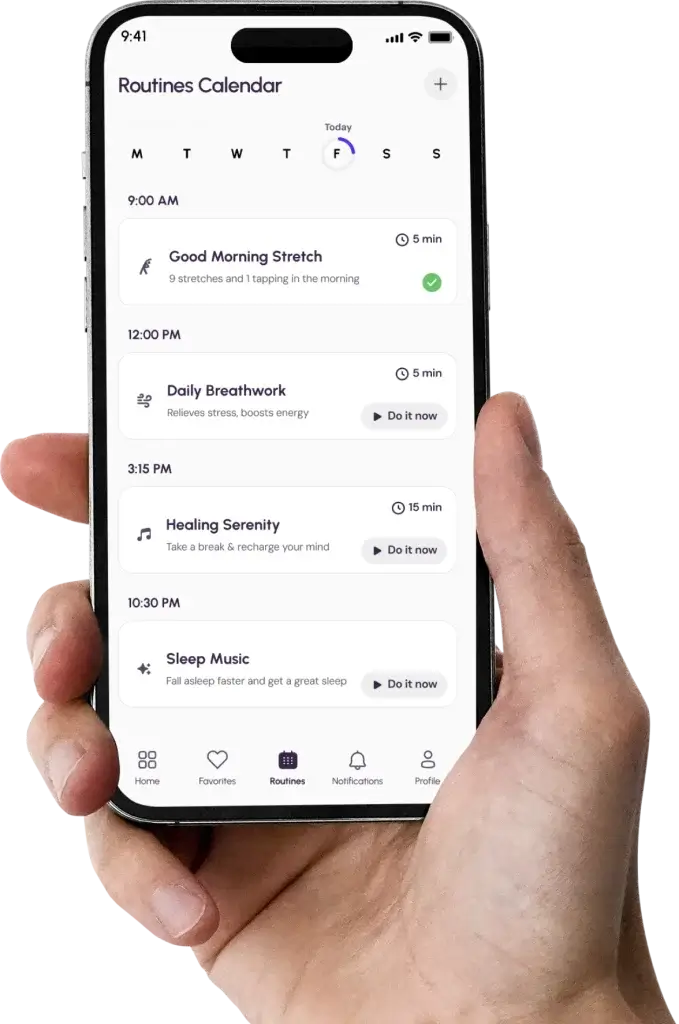
Here are simple ways to help employees manage stress every single day.
Encourage Micro-Breaks
Science backs this up.
A study from the NIH found that short breaks during the workday reduce fatigue, improve mood, and boost focus.
Encourage your team to step away from their screens for even 5 minutes every hour.
That’s it. Five minutes.
Tools like the Healthy Mind App’s daily breathwork make this easy.
A few guided breaths can reset the nervous system in under 3 minutes.
Promote Movement
Sitting all day is hard on the body and the mind.
Encourage walking meetings.
Share desk stretch routines.
Make it normal to move during the workday.
The Healthy Mind App’s office stretches gives employees quick, easy stretches they can do right at their desk.
No gym required.
Support Focus, Not Multitasking
Constant context-switching is exhausting.
Help employees protect blocks of uninterrupted focus time.
That means fewer unnecessary meetings.
Fewer pings.
More deep work.
Even 90 minutes of focused time a day makes a huge difference in how people feel.
Managing Someone With Anxiety at Work
Anxiety is incredibly common.
In fact, the Anxiety and Depression Association of America reports that anxiety disorders affect 40 million adults in the U.S.
Many of your employees are dealing with this quietly.
Here’s how to support them without overstepping:
- Don’t single them out or make it a big deal
- Keep communication clear and calm, sudden changes can be hard
- Offer flexibility where possible (deadlines, workspace, schedules)
- Ask what support looks like to them, don’t assume
- Point them toward resources like the Healthy Mind App’s anxiety relief tools
- Never shame someone for asking for help
You don’t need to be a therapist to be a supportive manager.
You just need to be human.
When Coworkers Are Causing Anxiety
Sometimes the stress doesn’t come from the workload.
Sometimes coworkers are causing anxiety.
Conflict between teammates, exclusion, gossip, or a competitive culture can make people dread coming to work.
Here’s what managers can do:
- Address conflict quickly and directly (don’t let it fester)
- Set clear expectations for how team members treat each other
- Create norms around respectful communication
- Don’t tolerate bullying or passive-aggressive behavior
- Check in with both parties individually during a conflict
A psychologically safe team is a productive team.
When people feel safe, they perform better and stress less.
The Role of Burnout (And Why It’s Different From Stress)
Stress and burnout are related, but they’re not the same thing.
Stress usually comes and goes. Burnout is a state of deep exhaustion from prolonged stress.
Burned-out employees aren’t just tired.
They feel detached, cynical, and hopeless about their work.
It’s a serious issue, and it sneaks up slowly.
Watch for these warning signs in your team:
- Frequent absence or lateness
- Drop in quality of work
- Withdrawal from team conversations
- Expressing feelings of hopelessness or not caring anymore
- Irritability or emotional reactions that feel out of character
The Healthy Mind App’s burnout tools are designed to help employees recover before burnout becomes a crisis.
Managers who want to avoid their own burnout can check out resources specifically built for management burnout because you can’t pour from an empty cup.
A Simple Plan to Reduce Employee Stress Starting This Week
You don’t have to overhaul everything at once.
Start small. Here’s a 5-step plan you can begin this week:
- Have one honest one-on-one with a team member you haven’t connected with recently
- Clarify priorities and send a quick message about what matters most this week
- Protect one hour of focus time for your team (no meetings, no pings)
- Share a wellness tool like the Healthy Mind stress relief app and encourage people to try it
- Ask for feedback with a simple “what would make work better right now?” to open powerful conversations
None of these cost money.
All of them create real change.
Why the Healthy Mind App Is a Smart Choice for Teams
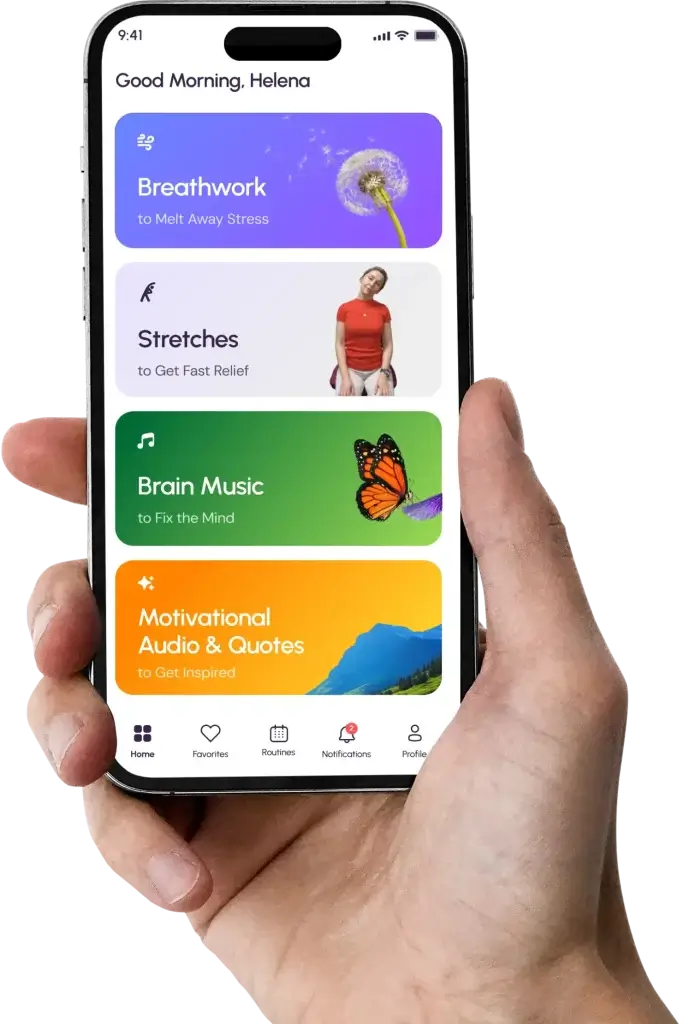
The Healthy Mind App is built for busy workdays.
It’s not a 45-minute guided meditation.
It’s not a complicated wellness platform that no one uses.
It’s a quick, effective tool that employees can use at their desk, between meetings, or whenever they need a reset.
Features include:
- Guided breathwork to calm the nervous system fast
- Office stretches to release physical tension
- Brain music to boost focus and energy
- Motivational audio to lift mood and rebuild drive
- Habits calendar to help employees build healthy daily routines
Whether you’re supporting a team of developers (developer burnout is real), salespeople (sales job burnout hits hard), or healthcare workers (one of the most stressed groups around), the Healthy Mind App meets your team where they are.
Final Thoughts: Your Team’s Wellbeing Is in Your Hands
Learning how to help employees deal with stress doesn’t require a psychology degree.
It requires attention, honesty, and action.
It means checking in.
Setting clear expectations.
Building a culture that respects rest.
It means treating your team like whole human beings, not just task-completers.
When you do that, something amazing happens.
Productivity improves.
Turnover drops.
People actually want to come to work.
Stressed employees become engaged ones.
And you? You become the kind of leader people remember.
Start today.
Your team is counting on you.